


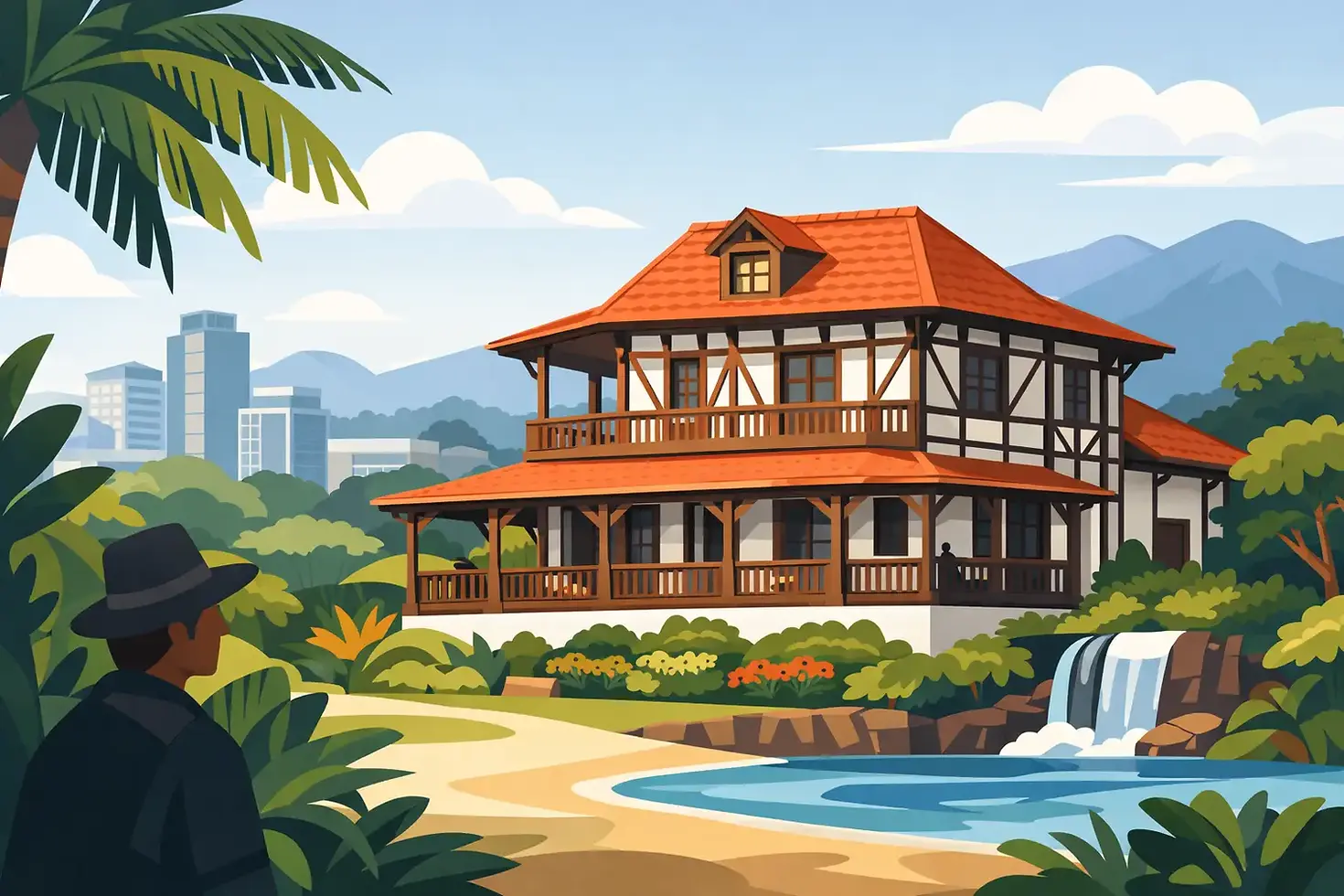
French Bahareque Architecture Guide for San José
A French bahareque architecture guide begins with a feeling: the quiet grace of a home that has held more than a century of San José life. Behind painted timber, generous verandas, and high ceilings is a building tradition shaped by local materials, practical wisdom, and the cosmopolitan ambitions of early 20th-century Costa Rica. For travelers who prefer a stay with a story, these homes offer something no standard room can reproduce.
French bahareque is not simply a decorative style. It reflects a meeting of construction traditions - earth-and-timber building adapted to Central America’s climate, then dressed with details associated with European, and often Victorian, taste. Its value lies as much in that cultural exchange as in its visual charm.
What French Bahareque Means
Bahareque is a traditional building method found across parts of Latin America. Its exact form varies by region, but the essential idea is consistent: a lightweight framework of wood, cane, or similar natural materials is filled and finished with an earth-based mixture. In Costa Rica, this approach was valued for its availability, insulation, and relative flexibility compared with heavy masonry.
The word “French” generally points not to a rigid construction formula imported intact from France, but to the architectural influence visible in the home’s composition and ornament. During the late 19th and early 20th centuries, San José looked outward. Coffee prosperity, international travel, and commercial ties brought European ideas into the capital. Builders and homeowners combined these fashionable references with materials and methods that made sense locally.
The result could include refined facades, vertical proportions, decorative woodwork, tall windows, and formal rooms, all supported by a vernacular structural system. Victorian influences often appear alongside French-inspired details, especially in homes built when eclectic taste was part of the city’s character.
French Bahareque Architecture in San José
San José’s historic neighborhoods once held many residences that expressed this layered identity. A house might feel distinctly Costa Rican in its materials and climate response while presenting an elegant, outward-looking face to the street. That combination is precisely what makes French bahareque architecture so compelling today.
A 1910 residence such as The Victorian Hotel carries this legacy into the present. Its heritage is not a theme applied after the fact. The building itself belongs to an era when skilled craftsmanship, European influence, and local construction knowledge met under one roof. Staying in such a space offers a more intimate relationship with the city than a conventional hotel tower can provide.
For visitors, the appeal is immediate but not superficial. Light moves differently through high-ceilinged rooms. Timber details introduce warmth. The scale is residential rather than anonymous, inviting guests to settle in after a day on Paseo Colón or an excursion beyond the capital.
A structure designed for its setting
Bahareque was a sensible response to climate and place. Earth-based infill can help moderate indoor temperatures, while wood allows a building to remain comparatively light. Generous windows and elevated ceilings support ventilation, an essential consideration in a tropical highland city where afternoons may turn cool or rainy.
Its seismic performance also helps explain why lightweight systems mattered. Costa Rica is a seismically active country, and traditional building knowledge often favored flexibility over sheer mass. This does not mean every historic bahareque building performs equally well today. Age, maintenance history, alterations, moisture exposure, and the quality of the original work all matter. A heritage structure requires informed stewardship, not assumptions.
The details worth noticing
When you encounter a French bahareque home, look beyond the facade. Notice the relationship between the street and the interior: a sheltered entrance, a corridor, a salon, or rooms arranged to welcome both family life and visitors. Observe the rhythm of windows, the proportions of doors, and the fine joinery that gives timber its presence.
Decorative elements may include turned posts, carved brackets, patterned vents, transoms, and trim painted in colors that make architectural lines legible. French influence may be felt in balance, refinement, and a preference for formal elegance, while Victorian character may appear in ornament, silhouette, or exuberant detail. Not every building will display all of these features. The charm of this tradition is its variety.
Why Preservation Requires Patience
Historic bahareque homes are beautiful because their materials are honest, but those materials demand care. Water is their greatest adversary. A neglected roof, blocked drainage, or poorly repaired wall can allow moisture to compromise timber and earthen infill. Restoration should therefore begin with protection from the elements, followed by thoughtful repair rather than indiscriminate replacement.
Modern interventions can be necessary for safety, accessibility, plumbing, electrical systems, and guest comfort. The question is how to make them without erasing the building’s character. Covering original walls with incompatible materials, sealing a house so tightly that it cannot breathe, or replacing crafted windows with generic alternatives can create new problems while diminishing the qualities that made the home special.
The most respectful approach treats heritage as a living responsibility. Specialists assess structural condition, identify original fabric where possible, and choose compatible materials for repairs. In hospitality settings, this work also involves a delicate balance: guests should enjoy reliable hot water, restful rooms, and attentive service without feeling that the house has been stripped of its soul.
How to Experience This Heritage as a Guest
A historic stay is best approached with curiosity. Rather than seeing the building as a backdrop for photographs alone, allow time to notice its quieter gestures. Pause in shared spaces. Look at the craftsmanship around a doorway. Imagine the city outside when streetcars, coffee merchants, and family carriages shaped the pace of daily life.
This kind of architecture also changes how a trip feels. A boutique heritage hotel can become a graceful base between experiences: a place to return to after a guided city visit, a cultural outing, or a restorative massage. The contrast matters. San José is energetic and evolving; a carefully maintained historic residence offers a calmer, more personal counterpoint.
For couples, it creates an atmosphere that feels naturally romantic without being staged. For culturally curious travelers, it adds context to the capital’s history. And for anyone arriving in Costa Rica for the first time, it offers a warm introduction to the country’s ability to blend tradition with gracious, modern hospitality.
Questions Guests Often Ask
Is bahareque the same as adobe?
No. Both may use earth-based materials, but adobe typically relies on earthen bricks, while bahareque uses a framework filled with an earthen mixture. Construction methods differ by region and period, so the terms should not be used interchangeably.
Does historic construction mean less comfort?
Not necessarily. A well-cared-for heritage property can offer excellent comfort while retaining its original atmosphere. The experience is different from a newly built hotel: rooms may have individual proportions and details rather than identical layouts. For many guests, that individuality is the pleasure.
Why are French and Victorian influences found together?
Early 20th-century architecture often borrowed from several visual traditions at once. In San José, European references were interpreted through local craftsmanship and practical needs, producing homes that are eclectic, elegant, and distinctly Costa Rican.
A French bahareque residence asks guests to slow down just enough to recognize the care held within its walls. Let that sense of place shape your San José stay, then step back into the city carrying a little more of its history with you.


Comentarios